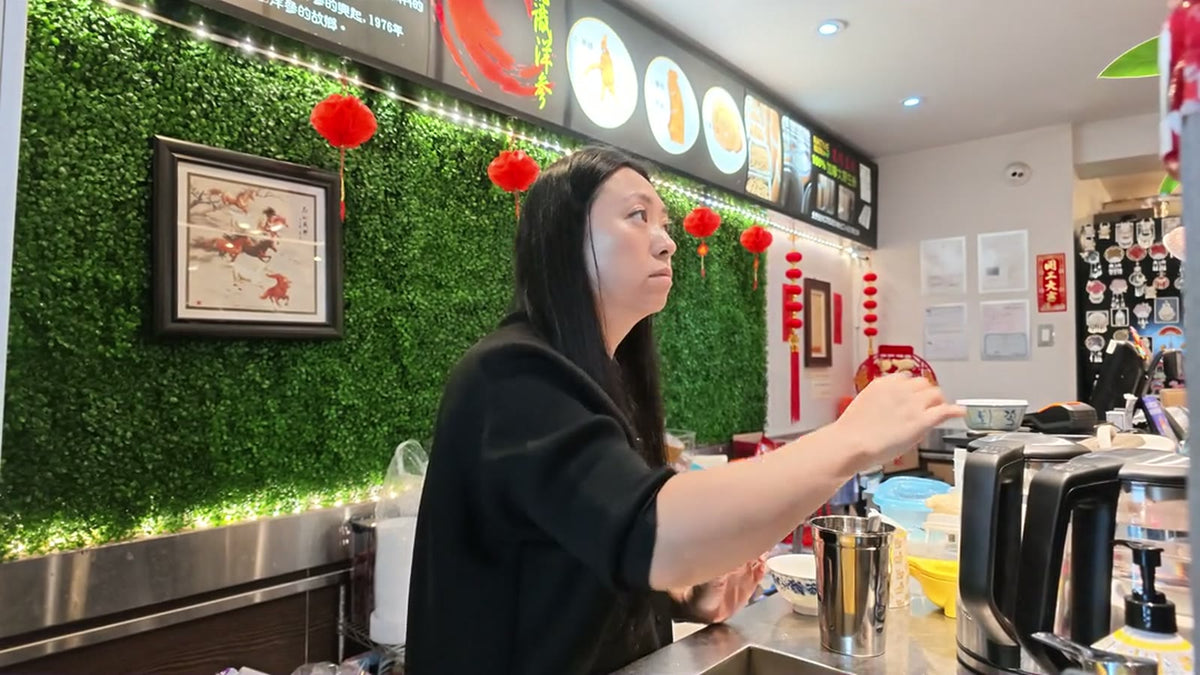
Lotus root starch (ǒufěn, 藕粉) is a powder made from lotus roots that turns into a soft, glossy jelly when you pour hot water over it. At Fosetter we carry a handmade one from Hubei. One of our team chose it, and here she explains how she picked it, mostly by tasting.
What lotus root starch is
Lotus root starch is made by grinding fresh lotus roots into a paste, filtering it, and drying the starch that settles out. To serve it, you mix the powder with hot water and it sets into a jelly.
Hubei province grows a lot of lotus. Around a third of China's lotus root production comes from Hubei, and Hong Lake (Honghu, 洪湖), a freshwater lake of about 348 square kilometres in the Jingzhou area, is known for its lotus flowers.
Who makes ours
Ours comes from the Honghu area in Hubei. Here is how our team member describes the maker, from what the factory manager told her:
He's an interesting person. He's from Henan, but he was born and raised in Hubei, so Hubei is his hometown. He just wanted to do one craft, properly and solidly. So that's what he did.
He makes it by hand, with no machines. He doesn't really sell retail himself. He does contract production for other people, putting their labels on it. So he doesn't want to take business away from them. That's no fun, you know.
But if it's handmade, how can he make a lot? So his output is very small, and it isn't steady either.
The taste test
This is the part she cares about most. In her words:
Let me put it this way. When I was choosing this lotus root starch, there were actually several makers, and all of them were handmade. I bought them, brought them back, and then I tasted every one. Only his had no strange taste.
So where does a strange taste come from? She explains it with the lotus root itself:
You know there are a lot of fish ponds around Honghu, right? When you eat the lotus root, you can taste a muddy, earthy smell. Once you compare them side by side, what you should taste is the fragrance of the lotus root, and not mostly that muddy smell. After you compare, you'll know which one is the one you really want.
That gives you a simple test you can do at home.
- Make a small bowl of each starch you want to compare, the same way.
- Smell it first, then taste it plain, before adding sugar or toppings.
- Look for a clean lotus fragrance. If the first thing you notice is a muddy or earthy smell, that one is further from what you want.
- Pick the one you like best. Your own mouth is the judge.
What about lab reports?
The second thing she did was check purity. The maker gave her a quality inspection report. But she keeps her own view on that:
I think a quality report, well, you can get one done if you pay for it.
So she trusts the taste comparison more than the paper.
How to make a bowl
The method is the same as for any lotus root starch, in two steps.
- Put the powder in a bowl and first stir it with water that is not boiling, until it dissolves.
- Then pour in freshly boiled water, until it turns into that lotus root starch jelly.
Ours has a pink colour once it's made.
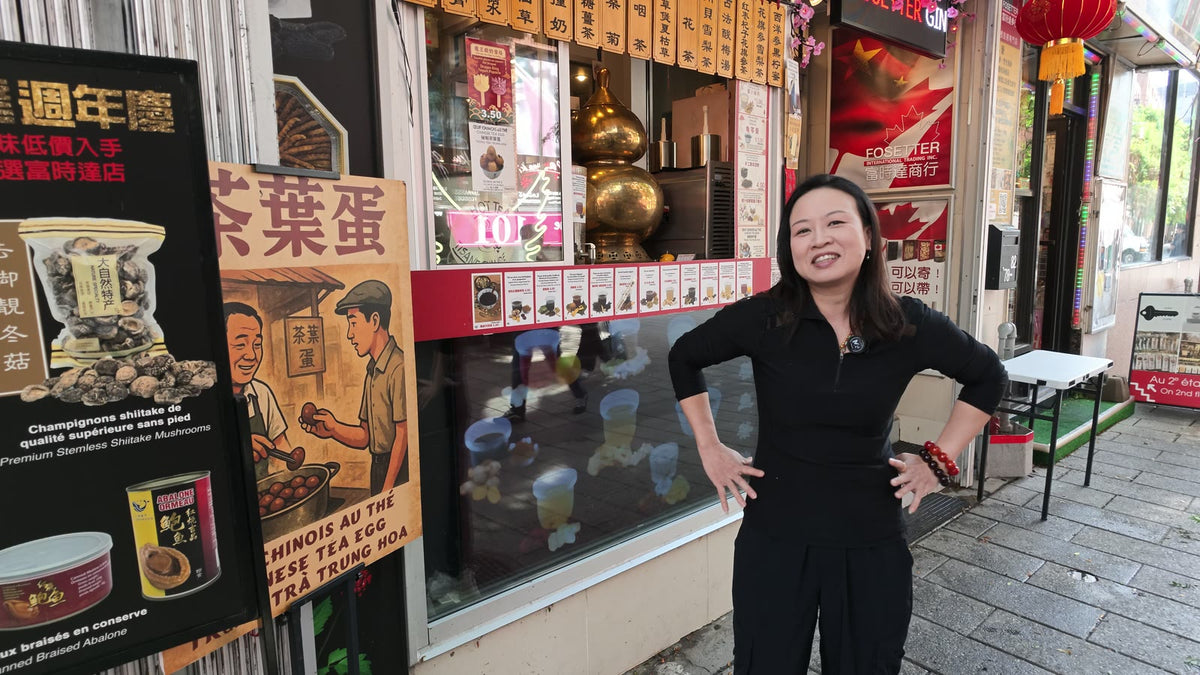
We don't sell lotus root starch online. If you'd like to try it, ask for it at Fosetter, 78 Rue De La Gauchetière Ouest in Montreal's Chinatown. For more tips on choosing dried goods, see bird's nest fragments vs whole cups or our ginseng FAQ.

Dejar un comentario
Este sitio está protegido por hCaptcha y se aplican la Política de privacidad de hCaptcha y los Términos del servicio.