
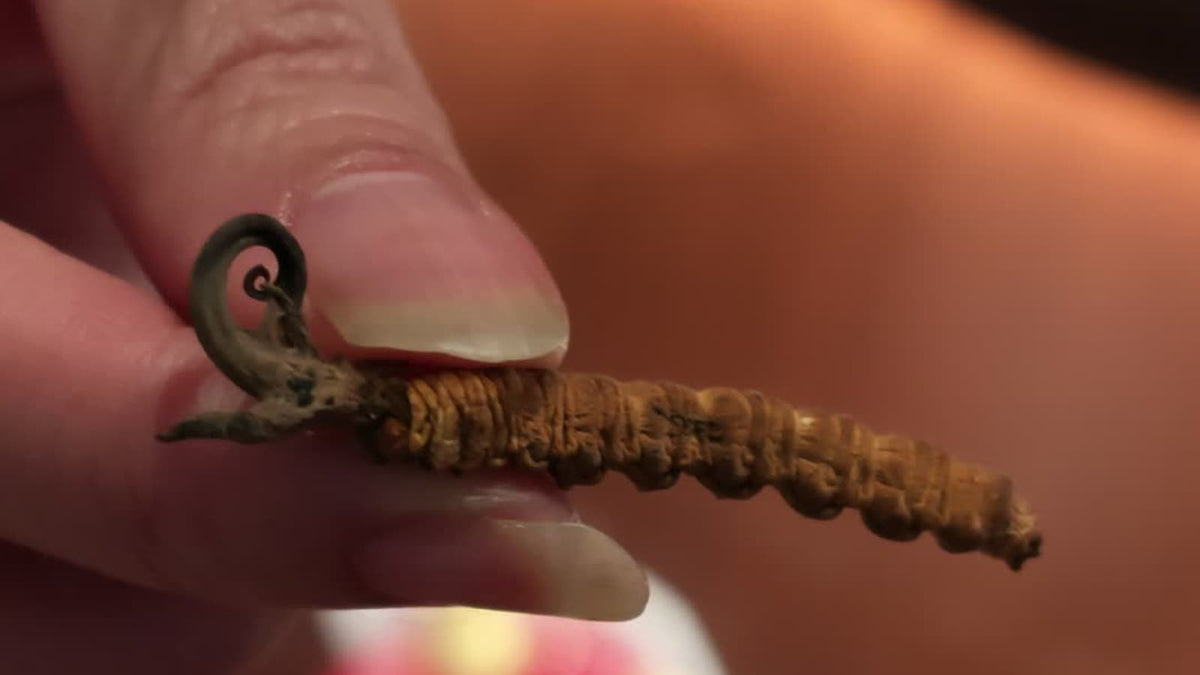
Carmen of Fosetter has another cordyceps check to add to the ones she already shows customers. "We'll open it up for you right here," she says, pulling one piece apart with her fingers. "You'll see that hollow channel inside. Take a look, see it? If there's a membrane coating it, it isn't there."
The ridges tell you something before you even cut it open
Before she gets to cutting, Carmen points out what's visible without opening anything. "Also, the texture is very obvious," she says. "The ridges, like this, are very obvious, very obvious." A real cordyceps has a clearly ridged, segmented surface, not a smooth one.
Length still matters, but it's one check among several
Carmen also compares two pieces side by side for length. "If this one is next to the shorter ones from before, this one is long, this one is good, this one is short," she says. Length is one data point, read alongside the surface texture and, when needed, the cut-open check.
A capsule option, for when you don't have time to prepare it
Fosetter also carries cordyceps in capsule form. "There are two products here, one is cordyceps pills, capsules," Carmen says. "This doesn't just have cordyceps in it, it also has Q10 added." It's a convenience option built on the same ingredient, not a substitute for knowing what real cordyceps looks like.

Leave a comment
This site is protected by hCaptcha and the hCaptcha Privacy Policy and Terms of Service apply.