Cordyceps is one of the most expensive things on the shelves at Fosetter, so it is also one of the things customers ask Carmen about most. In October 2026 she opened a box at the counter and walked us through how she picks it, how much it costs, and how simply it can be prepared. Here is what she said.
What cordyceps is
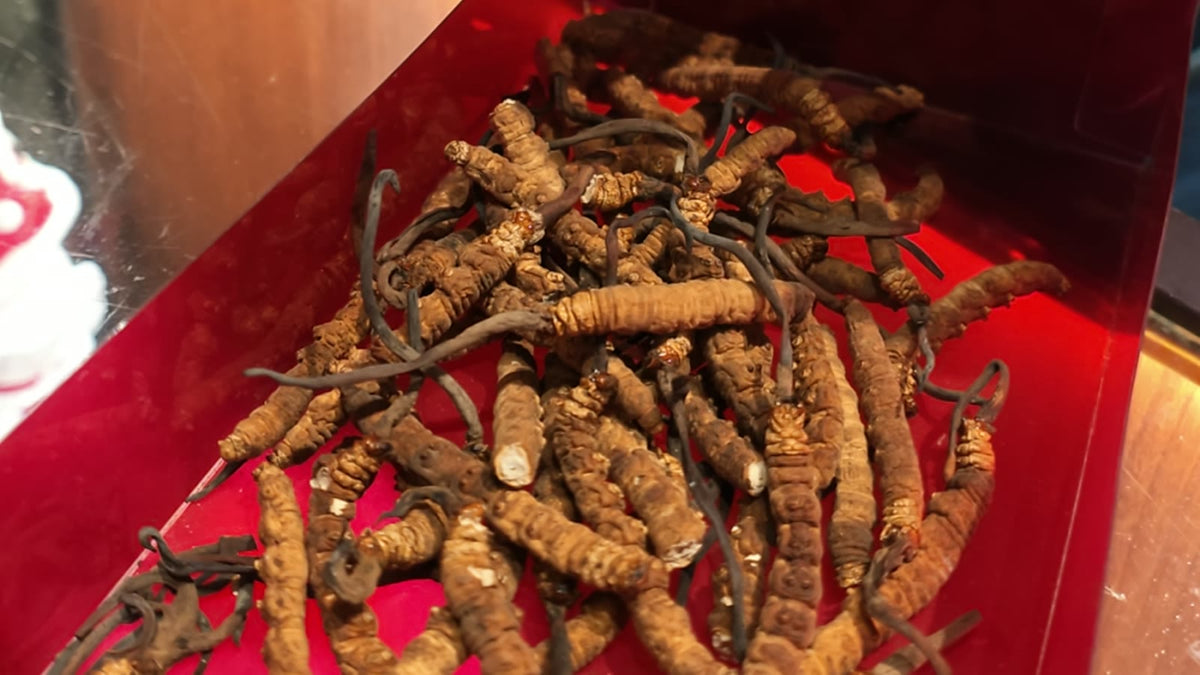
The cordyceps sold in Chinese dried-goods shops is wild Ophiocordyceps sinensis, a fungus that grows out of a ghost moth larva. Each piece has two parts. The golden body looks like a small caterpillar, and the dark, thin stalk growing from its head is the fungus itself, which Carmen calls the grass head. Because wild cordyceps is so costly, it has a long history of being tampered with to add weight, which is why buyers look so closely.
Start with the smell
Carmen holds the box up first. There is a fragrant, grassy smell, close to the aroma of wild mushrooms. That is the first thing she wants you to notice.
The grass head should not be too long
"When we pick cordyceps, the grass head should not be very long," she says. In her view, when the grass head grows very long, what the body carries has gone into the grass head, and the body itself is left with less.
Look at the colour from root to tip
The grass head should not be black all the way from the base to the top. On a good piece you can see a section that is darker and a section that is brown. If it is black from end to end, she would be wary of it. She also points to the head of the body and says it a few times for the camera. "The eyes are red."
Thicker pieces are worth the extra money
"When we buy, and when we sell, we try to pick pieces that are a little thicker and a little bigger," she says. "They cost quite a bit more." The reason is weight. With small pieces, it is easier for something to have been pushed inside along the supply chain to make them heavier, such as wooden sticks, bamboo slivers or bits of metal like lead. She is careful to add that she cannot say small ones should never be bought. But if a seller will not let you look at them closely, or you are weighing them and the size simply does not match the weight, take that as your signal.
Trade groups that test herbal products have reported the same thing. Undeclared sticks or wires, and soaking in mineral solutions to add weight, are known problems in markets where wild cordyceps sells at high prices.
What it costs at Fosetter
At the time of filming, a tael of 37.5 grams sold for $1,380, which she worked out at a little over ten dollars a piece. "We are not the prettiest goods," she says, "but our value for money is the best." There are about 120 pieces in that amount, between 37 and 38 grams. At two a day, that lasts 60 days without a break. She laughs that it comes to much less than a woman spends on facials over the same two months.
Expensive should not mean complicated
"Many people think something this expensive must be hard to prepare," Carmen says. "I always say, expensive things should not be difficult to handle." Her method is simple.
- Put two pieces in a thermos cup.
- Boil a pot of water and pour it in.
- Close the lid and leave it for two to three hours.
- Drink the water, and eat the cordyceps too, grass head and all.
If the look of it puts you off, she has a second option. "You can buy one of those coffee grinders for twenty dollars," she says. Grind the cordyceps to powder, put it in the thermos, pour in hot water, and you will not see the caterpillar at all.
Come and look for yourself
Carmen keeps her cordyceps in the shop at 78 Rue De La Gauchetière Ouest, and she is happy to open the box so you can check the colour, the size and the smell before you buy. You can also read our guides on bird's nest and dried sea cucumber, or ask us anything on our FAQ page.


Leave a comment
This site is protected by hCaptcha and the hCaptcha Privacy Policy and Terms of Service apply.