
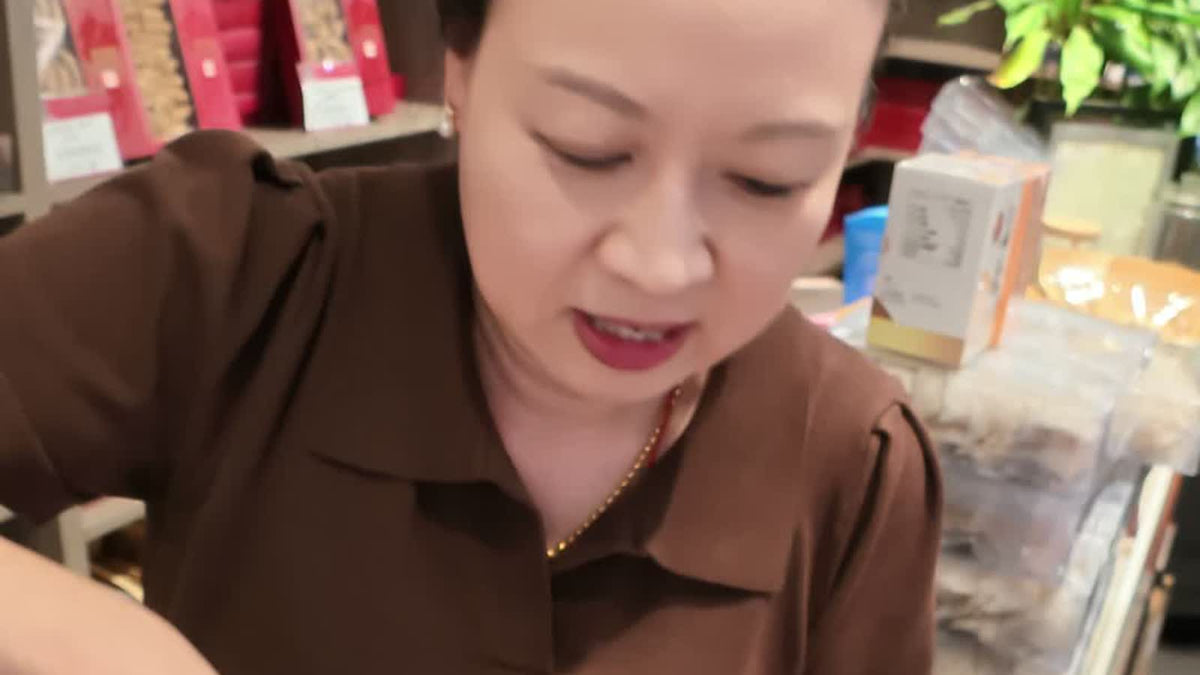
"This is cordyceps," says Carmen, who runs Fosetter in Montreal's Chinatown, holding one up. Here's what she actually checks before she'll sell a piece.
1. A shorter head, not a longer one
"It shouldn't have a very long grass head," she says. "With a long head, all the nutrients end up concentrated in the head itself — so what the cordyceps carries in its own body ends up being less."
2. Smell it
Good cordyceps has a distinct smell. "You can smell it," she says. "There's a strong aroma to it — it's like a mushroom, that kind of wild-fungus scent."
3. Color, from base to tip
"The head shouldn't be solid black from the base to the tip," she says. "If it's solid black, it might be fake." Comparing pieces, she points out the ones with a natural brownish tone running through them as the real thing.
4. The eyes turn red with age
Holding up a piece she's had on hand a while: "I've kept this one for a long time, and its eyes have turned red."
5. Size, and why weighted pieces are smaller
"Generally, when we're buying or selling, it's best to pick ones that are a bit thicker and a bit bigger," she says. "They cost more, but the smaller ones are more likely to have come through a supply chain where they've been weighted — a bit of wood inserted, or something like lead, to add weight." Bigger, thicker pieces are harder to tamper with this way.


Leave a comment
This site is protected by hCaptcha and the hCaptcha Privacy Policy and Terms of Service apply.