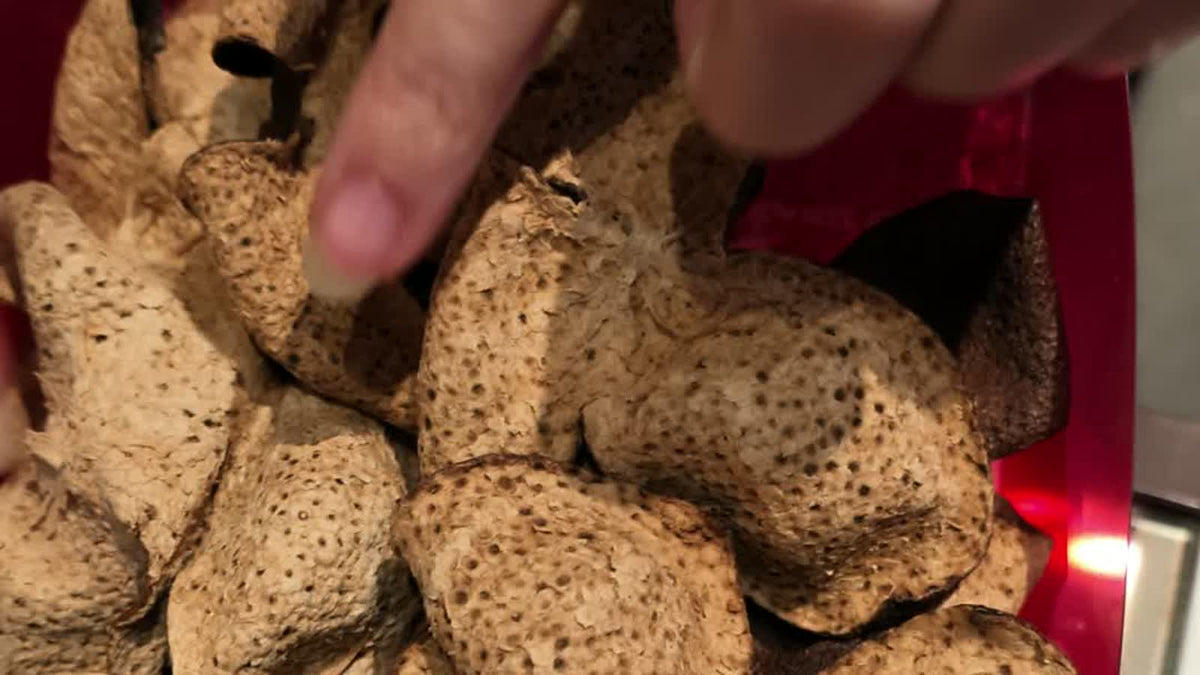
Every piece of real Xinhui tangerine peel has what Carmen calls a 果丁, a little stem-end core, and on real Xinhui peel it always has five points. "If a piece you're buying is missing this five-point core, it's probably not Xinhui peel," says Carmen, who runs Fosetter in Montreal's Chinatown.
A second check: hold it up to the light
Turn the peel over, she says, and even with no light behind it you can already see small oil glands scattered across the surface, densely packed. That's the oil gland pattern she looks for.
For comparison, she holds up a different piece: "This is just an ordinary peel. Does it let light through? Yes, it does — but there's a lot stretched into it that isn't really Xinhui peel. Its core isn't five-pointed. That's probably peel from Guangxi, or somewhere else nearby."
She's careful about what that comparison does and doesn't mean: "I can't say it's fake — it really is peel, genuinely real. But we do need to be clear about where it's actually from."
What old-tree peel looks like
"Ours comes from old trees," she says. "Every piece has these little scarred marks on it. Ordinary peel is usually smooth."
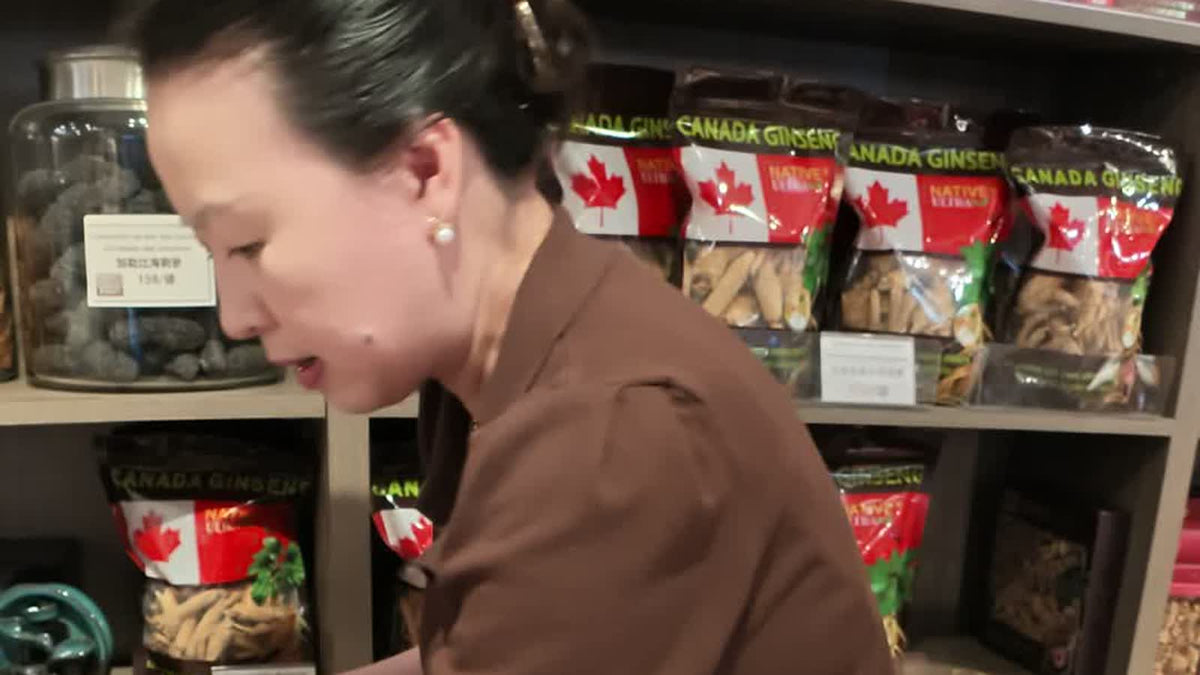
Carmen also cuts into her own stock in front of customers. "We're not afraid to open it up, because every product we sell is our name on the line," she says. "Every piece is the same — nothing else mixed in." She's run the shop for over a decade now: "The cost of getting it wrong is very high for us. Our name is right there on the sign. I'm half-afraid a customer's going to come back and hit me."


Leave a comment
This site is protected by hCaptcha and the hCaptcha Privacy Policy and Terms of Service apply.